
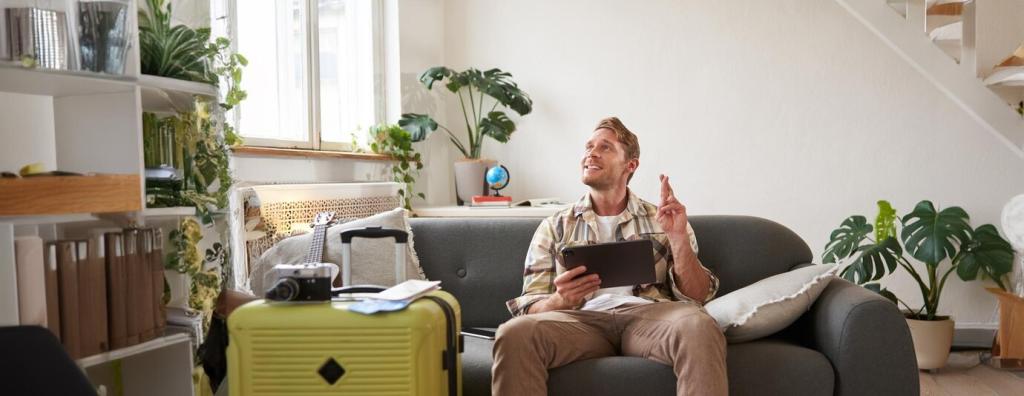



Maximizing Vertical Space: Build Up, Breathe Easy

Today’s chosen theme is Maximizing Vertical Space. Step into a home where walls work harder, ceilings feel taller, and every inch earns its keep without sacrificing style, comfort, or personality.

Vertical lines, tall curtains, and stacked storage draw the eye upward, making rooms feel larger and calmer. Try aligning top edges of frames and shelves to create a clean horizon that visually lifts the ceiling while also organizing your wall into intuitive, accessible layers.
Divide walls into zones: everyday reach, occasional access, and archival height. Keep daily items between shoulder and hip, reserve a safe step-stool zone for monthly tasks, and store deep archives high. This layered strategy saves time and discourages clutter from creeping onto surfaces.
Maya’s 300-square-foot studio felt chaotic until she mapped three vertical zones. By lifting books, plants, and tools off the floor, she reclaimed eight square feet. She wrote us later: “I walk differently now—lighter, taller.” Share your story below and inspire another small space dweller.

Walls That Work: Shelving, Rails, and Grids

01
Floating shelves feel airy but demand solid anchors; bracketed shelves carry heavier loads with visible support. Find studs spaced roughly sixteen inches apart, or use high-quality anchors suited to your wall material. Keep heavier items near the bottom shelf to stabilize the visual and physical load.
02
Pegboards adapt to changing hobbies; French cleats let cabinets and bins lift on and off effortlessly. When Liam switched to a cleat rail above his desk, his tools finally had a home. He reconfigures weekly, proving flexible systems keep clutter low and creativity perpetually within reach.
03
Grid panels transform a wall into an adjustable canvas for baskets, hooks, and shelves. Start small, then add modules vertically as needs expand. Subscribers often share clever hacks—like adding a slim planter row at the top to soften the grid. Show us your grid layout for a feature.

Cabinets to the Ceiling

Extend kitchen uppers or wardrobes to the ceiling and use anti-tip hardware, shims, and secure mounting. Incorporate a top row for seasonal storage. Add a contrasting crown or shadow line to visually finish the height and reduce dust-prone ledges that otherwise steal time from your cleaning routine.

Above-Door and Transom Opportunities

That sliver above a doorway can host books, baskets, or a slim plant shelf. Use low-profile brackets and consider lighting for safety and charm. Readers report gaining linear storage equal to a full extra shelf in tight hallways without crowding the floor or interrupting traffic flow.

Rolling Ladders and Step Solutions

If you build tall, plan safe reach. A compact, wide-tread step stool stores vertically behind a door. For libraries, a rolling ladder looks dramatic and keeps access smooth. Tell us your preferred reach tool and why—it helps the next reader balance ambition with everyday practicality.

Corners and Nooks: From Dead Space to Daily Heroes

Corner Shelves with Real Utility

Use triangulated or curved corner shelves to prevent hip bumps and to guide the eye upward. Install the lowest shelf above knee height to preserve floor flow, then scale up with lighter items. Readers love corner plant stacks because they lift greenery into light while freeing precious windowsills.

Slim Towers in Tight Alcoves

A narrow pull-out tower beside the fridge or washer capitalizes on vertical inches. Choose casters and anti-tip guides to keep movement safe. A subscriber shared a paint-sample tower that doubled as a color archive—creative, tidy, and delightfully unexpected in a once forgotten gap.

Entry Nook Command Center

Mount a vertical rail with hooks, trays, and a small shelf for keys, masks, and mail. Add a top cubby for umbrellas and a bottom hook for a foldable tote. Post your command center photos; we’ll compile a gallery of the smartest, smallest entries our community has ever seen.

Safety, Anchors, and Everyday Ergonomics

Plaster, drywall, and masonry each demand different anchors. When studs are elusive, toggle bolts or specialty anchors can help. Always check manufacturer load ratings, distribute weight across multiple fasteners, and place heavier objects lower. Safety isn’t glamorous, but it lets vertical ideas last.

Safety, Anchors, and Everyday Ergonomics

Design around how often you use items. Daily goods live in prime reach, occasional items higher, and rarely used gear up top. Pair this with a stable step stool. Share your frequency map with us, and we’ll send a printable checklist to fine-tune your vertical layout.

Style in the Sky: Designing Upward with Grace

Alternate filled shelves with breathing room to avoid a heavy stack effect. Repeat materials—wood, matte black, woven fiber—to create continuity. Align top lines but let one accent rise above to add personality. Share your favorite material combo and why it makes your vertical build feel cohesive.

Style in the Sky: Designing Upward with Grace

Uplights, picture lights, and slim sconces emphasize height and create calm. Trailing plants soften grids and laddered storage. Mix closed bins with open displays so the eye can rest. Send us a snapshot of your most photogenic vertical vignette and we might spotlight it in the newsletter.

Style in the Sky: Designing Upward with Grace

Choose one wall this weekend. Add a rail, one shelf, and a plant ledge. Post before-and-after photos and tag your biggest surprise—capacity, calm, or both. Subscribe for next week’s advanced vertical planning guide, including printable templates for studs, sightlines, and balanced shelf spacing.
Ajobincome
Privacy Overview

This website uses cookies so that we can provide you with the best user experience possible. Cookie information is stored in your browser and performs functions such as recognising you when you return to our website and helping our team to understand which sections of the website you find most interesting and useful.